

Claudine Verheggen
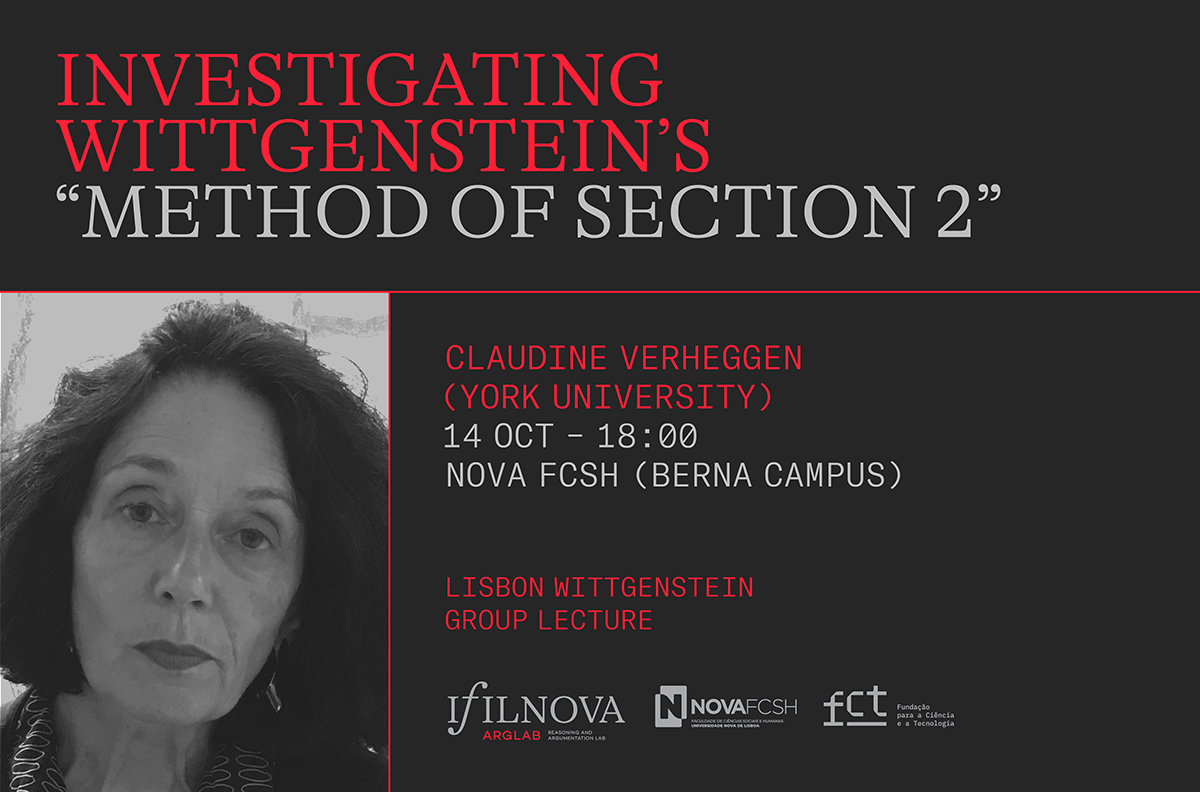
Ludwig Wittgenstein’s method of section 2 of Philosophical Investigations is that of trying to make sense of a philosophical idea by trying to “make the idea real”, that is, to “describe or imagine a situation to which the philosophical idea in question truly applies” (Stroud 1983). I argue, with Barry Stroud, that the method of section 2 can be used to rule out reductionist accounts of meaning, but, against Stroud, that it can also be used to rule out the possibility of both private and solitary languages. Moreover, constructive claims about meaning can be generated when the method is applied to the idea of a shared or social language.
Bio
Claudine Verheggen is Professor of Philosophy at York University in Toronto. Her research focuses on foundational issues in philosophy of language and their connections to issues in philosophy of mind, metaphysics, and epistemology. These include normativity, objectivity, non-reductionism, truth, conceptual relativism, and philosophical scepticism. She is the author of What is Philosophy of Language? (Polity, 2026) and, with Robert H. Myers, of Donald Davidson’s Triangulation Argument: A Philosophical Inquiry (Routledge 2016), as well as of numerous articles on Wittgenstein’s thoughts on meaning and rule-following. She edited Kripke’s Wittgenstein on Rules and Private Language at 40 (Cambridge University Press, 2024) and Wittgenstein and Davidson on Language, Thought, and Action (Cambridge University Press, 2017).
This is the fifth Lisbon Wittgenstein Group Lecture, a series of lectures within the scope of the activities of the Lisbon Wittgenstein Group, coordinated by Nuno Venturinha.