

Eve Kitsik on “Concept-Blaming: The Blame in the Game of the Name”
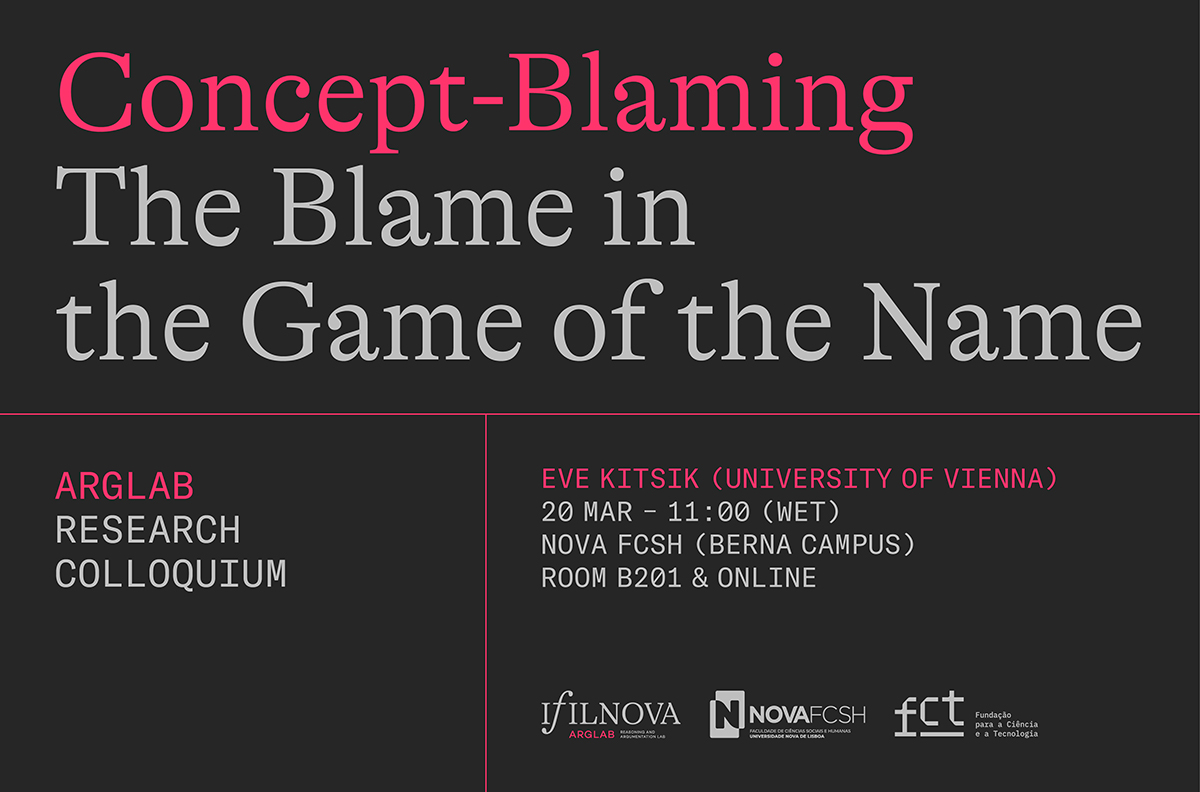
I introduce and discuss “concept-blaming”: unfittingly making a linguistic resource (paradigmatically, a term/meaning pair), rather than its users, salient as a source of badness. Plausible examples of concept-blaming include (1) calls to abandon terms like “conspiracy theory”, “fake news”, and “democracy”, because these linguistic resources are often used maliciously or thoughtlessly; (2) insistence that “racism” and “sexual harassment” should have narrow scope because the broad-scope versions of these concepts are often used unconstructively or because they “end conversations”; and (3) the “euphemism treadmill”: focusing on battling words (like “coloured” or “homeless”) that have acquired negative connotations, and not thinking enough about why these words, and their replacements, keep acquiring negative connotations. We need to understand concept-blaming better and avoid it, for two reasons. First, when critical attention is misdirected to linguistic resources, we fail to blame the blameworthy—the language users whom it would be fitting to make salient as the source of the badness in question. In this regard, concept-blaming is similar to victim-blaming and (especially) technology-blaming. Second, concept-blaming leads to ineffective intervention. In this regard, the case against concept-blaming is even stronger than the cases against some central examples of victim blaming and technology-blaming. (Potential) victims, guns, and AI tools sometimes regrettably need to be made salient as sources of badness—as factors whose presence, behaviour, or features can and therefore should be modified to prevent assault, gun violence, or plagiarism. There is no comparable pragmatic justification for focusing on linguistic resources instead of the blameworthy language users.
Eve Kitsik (University of Vienna)
To join the session on Teams, please get in touch with Maria Grazia Rossi at mgrazia.rossi@fcsh.unl.pt or Giulia Terzian at giuliaterzian@fcsh.unl.pt for the details.
This event is part of the ArgLab Research Colloquium organised by Maria Grazia Rossi and Giulia Terzian at the Laboratory of Argumentation, Cognition and Language of the NOVA Institute of Philosophy. For any inquiries, please contact Maria Grazia or Giulia.