

Faces da Multidão
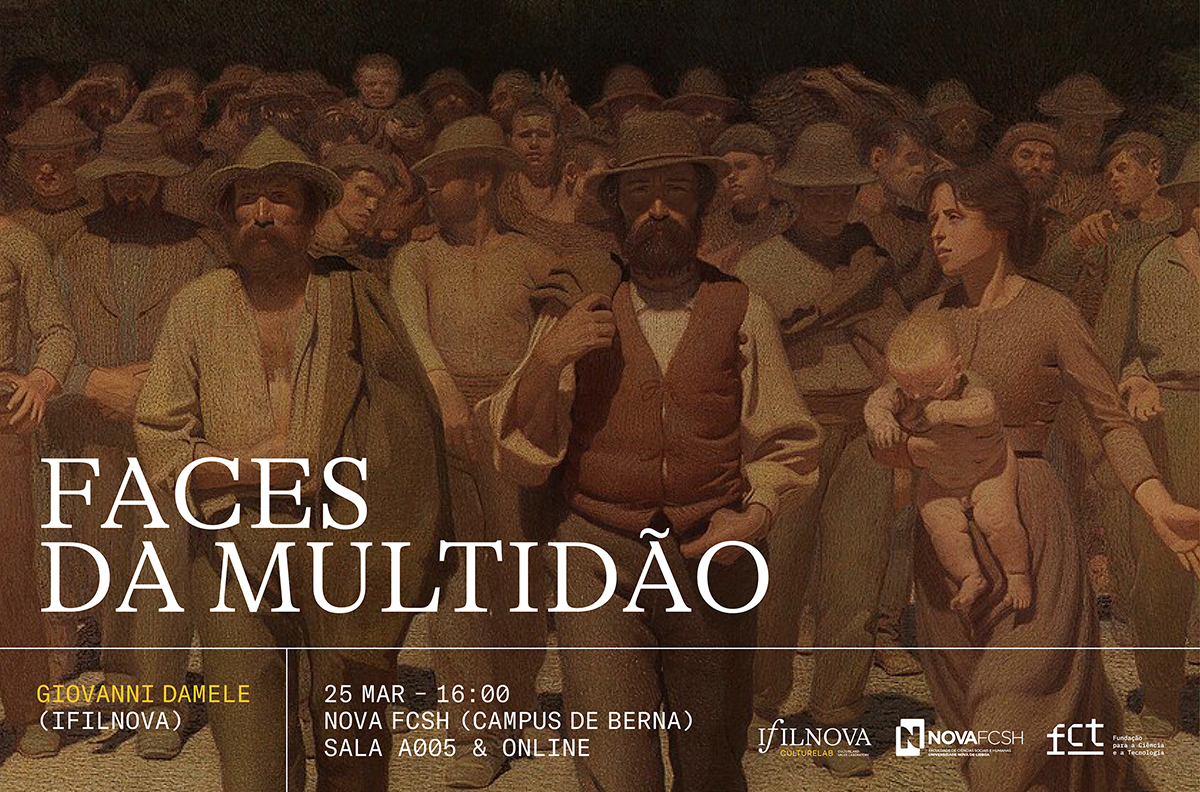
In the last quarter of the 19th century, a new phenomenon caught the attention of European intellectuals: the crowd. Despite elements of continuity with previous mass movements, the industrial and urban crowd was a new phenomenon with new characteristics. A new discipline emerged at the intersection of sociology and psychiatry to study these characteristics: the “psychology of crowds”. Between the last decades of the 19th century and the first decades of the 20th century, the growing prominence of the masses also attracted the attention of philosophers — Ortega y Gasset’s The Revolt of the Masses was published in 1929 — writers (Baudelaire, Edgar Allan Poe, Émile Zola, among others) and artists. The image of the crowd oscillates between the romantic, and in part still pre-industrial, imaginary of an anonymous and collective agent of historical progress and its new representation as an irrational and unpredictable force: “the great hysteric”. This paradigm shift can be exemplified by two works of art, of different value and purpose: Giuseppe Pellizza’s “Il Quarto Stato” and Sexto Canegallo’s “La Folla”.
The seminar will be conducted in Portuguese. To join the session via Google Meet, use this link.