

Vasfi O. Özen
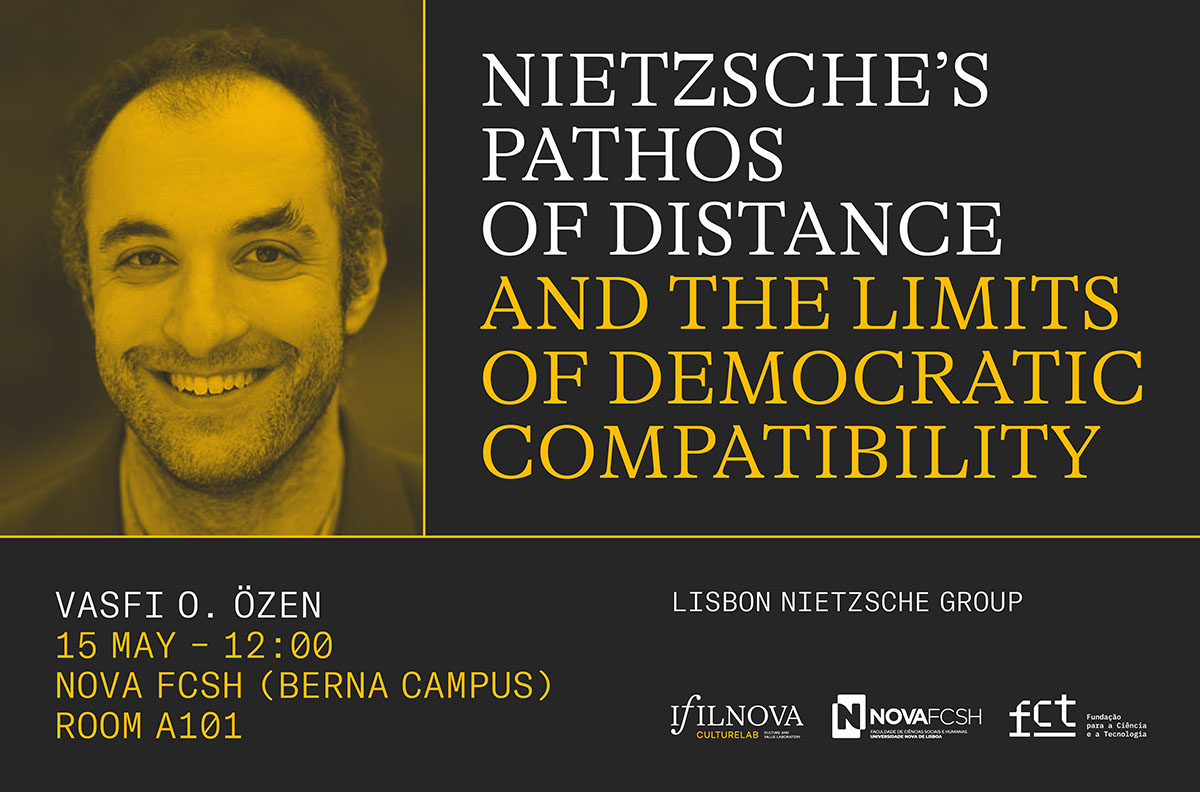
The pathos of distance (Das Pathos der Distanz) stems from a natural predisposition that manifests itself in certain relations that one bears to one’s sociocultural environment. Nietzsche minimally defines the pathos of distance as ‘the feeling of difference in rank [das Gefühl der Rangverschiedenheit]’ (NF-1885, 1[10]) which suggests a sense of social distance. But the sense Nietzsche conveys by distance goes beyond the mere notion of being socially distant towards others. The pathos of distance involves separating oneself from others socially as well as psychologically to realize one’s own potential and thereby the perfection proper to one’s nature. Hence, in TI, “Forays of an Untimely One”, §37, Nietzsche gives a fuller characterization of what the pathos of distance is. The pathos of distance is prompted by ‘the gulf between one people and another, one class and another’, which then results in ‘the will to be oneself, to stand out [der Wille, selbst zu sein, sich abzuheben].’
Various questions immediately crowd in: what unique characteristics or qualities must one have to stand out? What does to stand out as one’s own person involve? Where does this pathos come from? Is it innate rather than something enculturated, constituted by, and constitutive of particular ways of life? Which is it? Or is it some blend of both?
The pathos of distance is the necessary prior condition for the enhancement of power and self-overcoming of both individuals and society driven by the will to self-discipline and self-mastery. I argue that the emergence and cultivation of the pathos of distance is achieved by establishing a certain boundary or hierarchical order between individuals wherein differences in individual capacities and aptitudes create a hierarchy of rights and duties. Next, I seek to comprehend and assess Nietzsche’s claim that the belief in equality of rights and privileges, which is the normative bedrock of democracy, fosters a culture of mediocrity and resentment, and entails a repudiation for exceptional individuals. One of the central debates in contemporary Nietzsche scholarship concerns whether the Nietzschean pathos of distance is compatible with the formal institution of equal rights. According to one influential interpretation, when Nietzsche criticizes equality, he is criticizing the idea that all human beings have inherent equal value (the presumption of equality of types), and not that they have equal rights, liberties, and status (the presumption of political equality). Equality of rights refers to formal equality which simply connotes sameness, equal, or similar treatment of all. Because equality of rights has no substantive normative content nor does it involve a commitment to a specific conception of the good, it cannot be plausibly seen as an obstacle to the cultivation of the pathos of distance which is bolstered by a steadfast belief in the superiority and worth of certain humans. On this interpretation, it is suggested that Nietzsche himself arguably thought that commitment to the institution of equal rights is compatible with the pathos of distance. I take issue with scholars who embrace a form of compatibilism between democracy (particularly democratic institutions) and the anti-egalitarian spirit of the pathos of distance.
Bio
Vasfi Onur Özen completed his Ph.D. in Philosophy at the University of Kansas in May 2022. Since July 21, 2025, he has been a Global Postdoctoral Fellow at Habib University, affiliated with the Comparative Humanities Program within the School of Arts, Humanities & Social Sciences. His academic journey spans several institutions: Vasfi Özen holds a B.Sc. in Economics, with a concentration in Business and Economic Ethics, from Martin-Luther-Universität Halle-Wittenberg (Germany), as well as a B.A. and M.A. in Philosophy from Katholieke Universiteit Leuven (Belgium). His research interests lie primarily at the intersection of moral psychology, the history of philosophy (particularly 19th-century German philosophy), philosophy of action, and social/political philosophy.