

Miriam Ronzoni
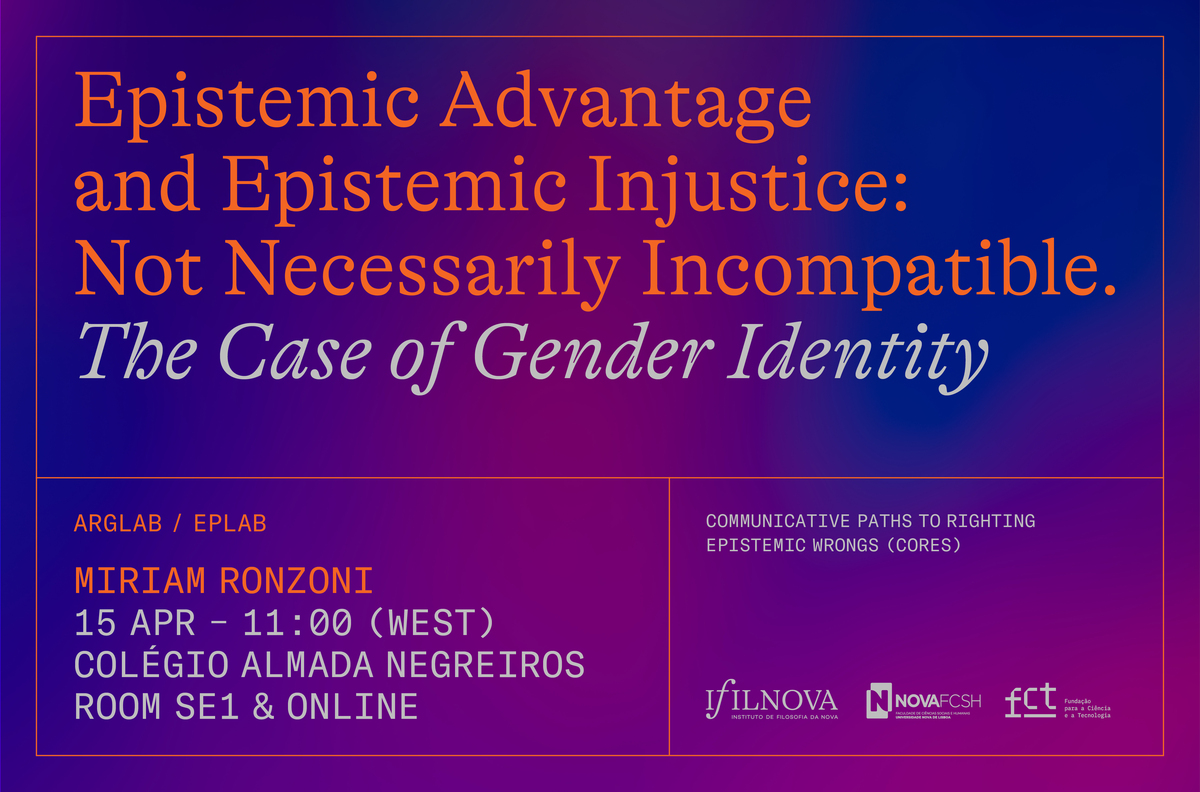
A prominent view within feminist epistemology, whether framed in terms of standpoint theory proper or more loosely, is that marginalised groups enjoy distinctive epistemic advantages in virtue of their social positioning. The epistemic injustice literature, instead, emphasises how marginalisation can generate epistemic disadvantage — especially hermeneutical injustice, where agents struggle to make sense of salient experiences due to gaps in collective interpretive resources. Are these two perspectives irreconcilable? How can marginalisation ground both epistemic advantage and disadvantage? After addressing some attempts to address this tension, the paper makes two points to offer a more robust resolution. First, we should not underestimate how the interpretive confusion generated by hermeneutical injustice can be productive, leading to epistemic advantage in a number of cases. Second, epistemic advantage should be understood in methodological rather than ontological terms. The paper concludes by sketching how this could be applied to the debate on gender identity.
Miriam Ronzoni (University of Manchester)
To join the session on Teams, please get in touch with Eleonora Volta at evolta@fcsh.unl.pt.