

The Tragedy of Political Power: On Destituent Power in Sophocles’ Antigone
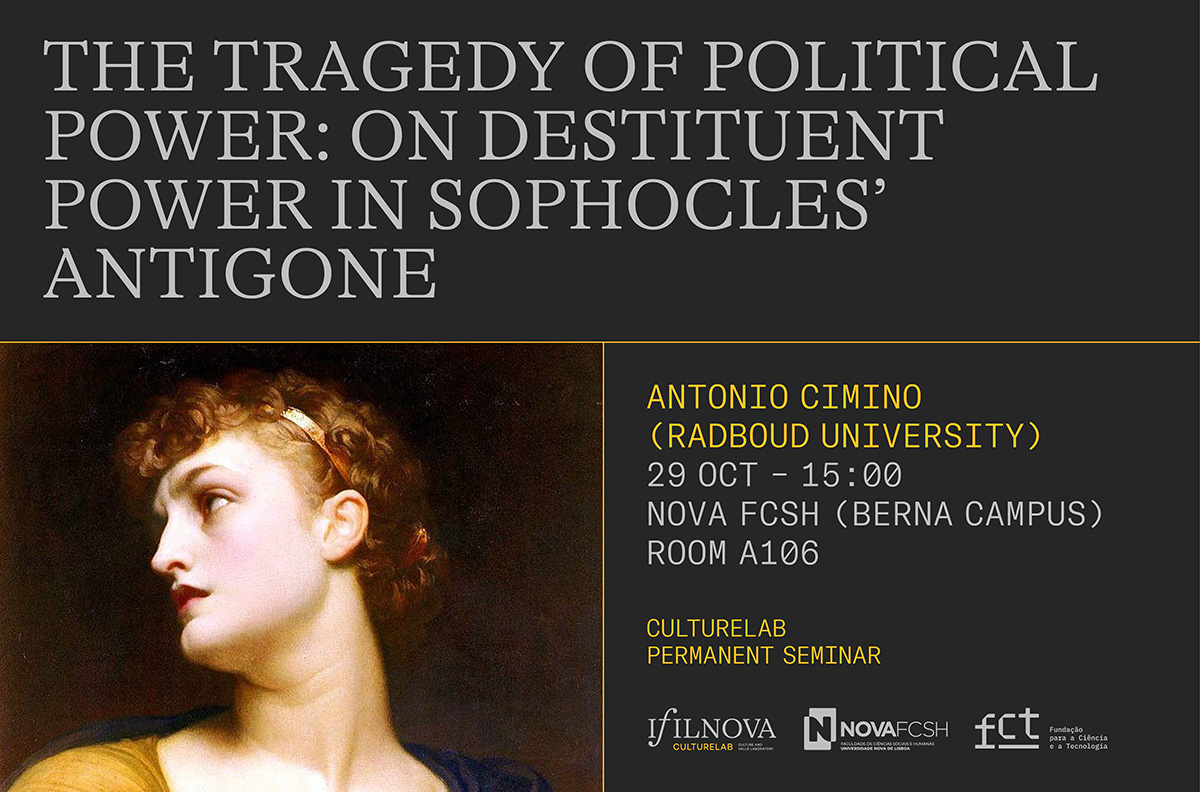
As a pinnacle of both ancient Greek culture and world literature, Sophocles’ Antigone has repeatedly captured the attention of many thinkers, who have considered this masterful play an inexhaustible source of inspiration when discussing fundamental human phenomena, such as the nature of power, the conflict between natural law and positive law, and the tension between the individual and the community. This presentation is no exception, as it will read the play through the lens of two concepts that have been at the forefront of many debates over the last two decades, namely, constituent and destituent power. This interpretation will be developed in three steps. First, it concentrates on the famous celebration of human achievements in the Antigone and suggests that the intricate relationship between their natural and cultural facets constitutes the key philosophical background of the play. Second, Antigone is reinterpreted as a representation of a dysfunctional form of destituent power and as a very ambiguous figure that cannot simply be presented as a heroine of civil disobedience. Third, the paper discusses the complex nature of Creon and attempts to re-evaluate his character, which is no less tragic and no less dysfunctional than Antigone, as he displays both the positive and the negative features of sovereign power. In dissecting the radical and specular opposition between Creon and Antigone, the paper presents them as two sides of an imploding political power.