

Cinema de Intervenção: 50 Anos Depois
24 junho, 18h30 > Sessão de abertura, Salão de Festas d’A Voz do Operário
25–26 junho, 15h30–23h > Sessões de cinema e debates, Casa do Comum
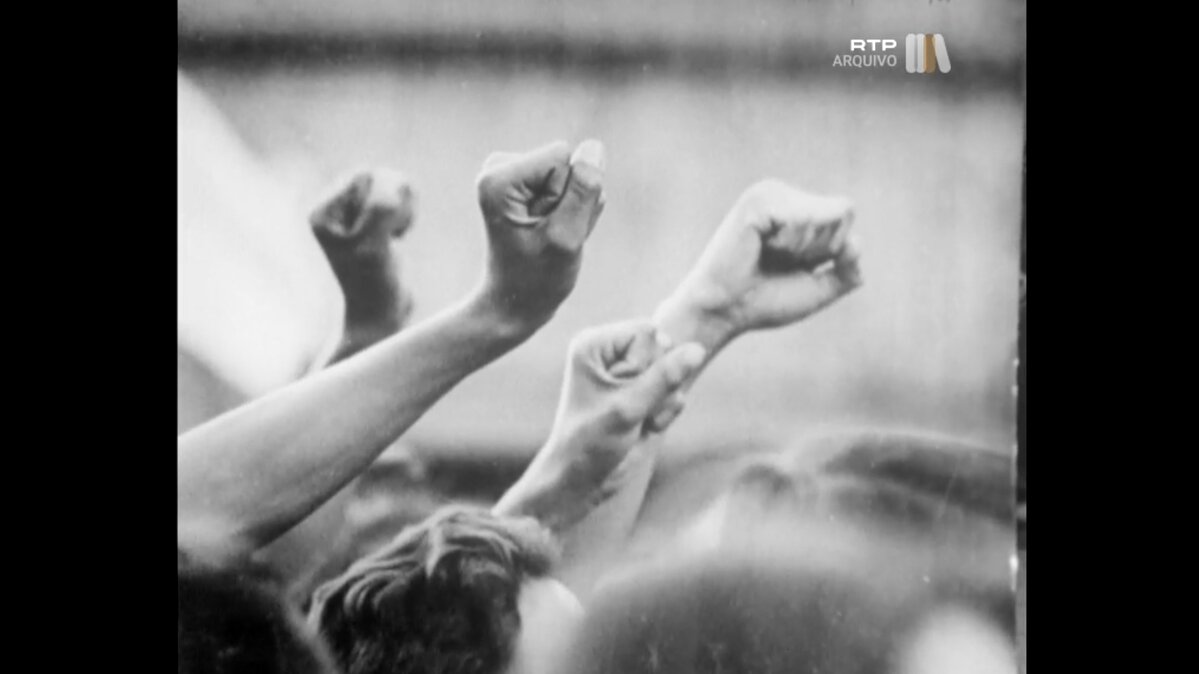
Este programa assinala 50 anos desde a Mostra Internacional de Cinema de Intervenção, um encontro de nove dias que decorreu no Estoril, em Maio de 1976, reunindo mais de 150 filmes comprometidos politicamente, de diversas geografias do Norte e Sul Global. Praticamente esquecida hoje, a Mostra foi um projeto ambicioso, abertamente militante, que articulou diferentes lutas de todo o mundo através do cinema e, desse modo, interrelacionou redes de solidariedade antifascistas, anti-racistas, operárias e feministas na Europa, com as lutas anticoloniais e anti-imperialistas de outras geografias. Nesse contexto, o cinema era inseparável da coletividade e da imaginação política, das práticas de ver, fazer e pensar em conjunto através de imagens. Ao longo de três dias, levantar-se-á uma série de questões em torno da capacidade do cinema para intervir na realidade política hoje em dia, bem como acerca das infraetruturas, antigas e novas, através das quais ele poderá ainda hoje produzir formas de coletividade e de mobilização.
Programa
24 de junho — A Voz do Operário (Salão de Festas), Lisboa
18h30 [Conversa e filme] SESSÃO DE ABERTURA
Apresentação do programa e exibição do filme My Heart Beats Only For Her, de Mohamed Soueid (2008, Líbano, 86’).
Nos longos anos 1960, generalizam-se os apelos para transformar cada capital árabe numa Hanói pela Revolução Palestiniana. O filme acompanha Hassan a redigir uma carta ao seu pai Abu Hassan Hanoi (nome de guerra) e procura compreender o seu período revolucionário no movimento Fatah, do Líbano a Hanói, passando pelo Dubai. [Filme falado em árabe, inglês e vietnamita, com legendas em inglês.]
25 de junho — Casa do Comum, Lisboa
15h30 [Filme] CINEMA AGAINST FASCISM (1936–1938)
Exibição de filme de compilação Ciné-Archives: Filmes da Frente Popular (Ciné-Archives : Films du Front Populaire, 2026, France, 55’, francês com legendas em inglês), seguida de debate.
Compilação de filmes de arquivo realizados entre 1936 e 1938, no contexto da Frente Populr em França, coligação de esquerda que ascendeu ao poder em França face ao avanço do fascismo na Europa. A montagem foi realizada por Ciné-Archives, o fundo audiovisual do Partido Comunista Francês e do movimento operário, onde os filmes estão conservados.
18h00 [Mesa-redonda] VER FILMES POLÍTICOS COLETIVAMENTE HOJE
Mesa-redonda com Cinema na Mula, Cinema Fulgor, Cineclube da Linha de Sintra [em português].
21h30 [Filmes] INTER-SESSÕES. INTERRUPÇÕES FÍLMICAS ONTEM E HOJE
Programa composto por Ciné-Tract 23 (anónimo, 1968, França, 3’); Now! (Santiago Álvarez, 1965, Cuba, 6’); e Video Tracts for Palestine (anónimo, 2026, 43’, novo corte), seguido de debate.
26 de junho — Casa do Comum, Lisboa
15h30 [Filmes e conversa] IBERIAN CONNECTIONS: COOPERATIVISM, REPRESSION, AND CLANDESTINE FILMS
Exibição de curtas-metragens do Colectivo de Cine de Madrid, exibidas de forma anónima na Mostra de 1976, tais como: Luchas Obreras, Universidad 71–72, Solidaridad con los presos españoles, Vitoria marzo 1976, seguida de conversa com Alejandro Alvarado (realizador, investigador) e Ana Algarra (historiadora, investigadora).
18h00 [Filme e conversa] NOT A PENNY ON THE RENTS
Exibição do filme Not a Penny on the Rents do coletivo Cinema Action (1969, Reino Unido, 22 min.), seguida de conversa com o novo Sindicato de Moradores de Lisboa [em português].
21h00 [Filme e debate final] SESSÃO DE ENCERRAMENTO
Exibição do filme Barronhos: Quem Teve Medo do Poder Popular? de Luís Filipe Rocha (1976, Portugal, 53’), seguida de debate aberto.
Descarregar o programa completo aqui.
The Ongoing Seminar
The Ongoing Seminar é um ciclo de encontros pontuais em Lisboa dedicados ao pensamento crítico e à reflexão coletiva sobre o papel do cinema no presente, as relações entre imagens e política, os potenciais emancipatórios das práticas documentais.
Organização: Doc’s Kingdom, em estreita colaboração com Philip Widmann, Raquel Schefer, Alejandro Alvarado, Ana Algarra.
Co-organização: IFILNOVA/CineLab, no âmbito do ciclo The Ongoing Seminar.
Parcerias: Casa do Comum, A Voz do Operário.
Entrada livre e gratuita, sem inscrição (no limite dos lugares disponíveis).